Opinion piece for NJ.com, the online arm of The Star-Ledger. Link to the original article here.
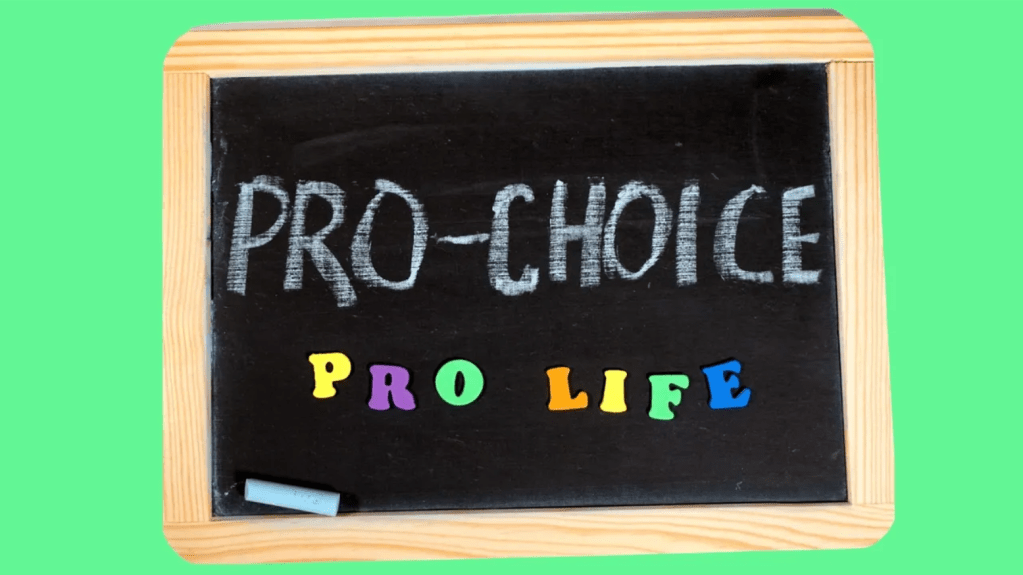
I’ve been increasingly thinking about how the reversal of Roe vs. Wade will affect our communities in New Jersey. In my opinion, abortion does not have to be a woman’s only choice in handling an unwanted pregnancy. Instead, our communities must provide a good support network to address their circumstances.
Let’s start by looking at who is being challenged by the abortion ban. Women are generally affected, but women of color are the primary target. In 2014, the Guttmacher Institute, a pro-choice think tank formerly affiliated with Planned Parenthood, released a statement attempting to disprove that abortion clinics specifically target women of color.
The Kaiser Family Foundation’s 2019 statistics on race and ethnicity of women who had abortions highlighted that more progressive-leaning states did not report racial statistics. These are California, Pennsylvania, New York, Oregon, Washington, Colorado, and Massachusetts. In states where race is registered, like Texas, abortions performed on white women are 26%, while Black and Hispanic are 67%. Our state of New Jersey doesn’t make reporting these statistics mandatory.
Abortion providers claim not to target any race in particular, but the people behind these institutions and their allies say otherwise.
NPR reported last month on the leaked Supreme Court memo and interviewed Mississippi abortion activist Michelle Colon, who said, “We are here for all women and girls, all people, but our specific target — and we’re unapologetic about that — is Black and brown.”
If you are targeting a specific community in your efforts to propagate choice, what exactly does that mean? Are you persuading them to choose what you want? What if a group in their target demographic says no? Do they stop being human, or are they still just targets? Even the Guttmacher Institute itself trumps this cause.
It takes two to get pregnant. What does the other half have to say about this? What role do men have in supporting women through unexpected pregnancies? It turns out, not much.
It appears to be an ongoing culture of sexism in the Hispanic community, where the number of absentee fathers is high, and there is a lack of positive male role models. A 2020 Census Bureau report states that Black and Hispanic fatherless families account for 20.6% of all fatherless families nationwide, compared to just 2.8% among whites. I can attest to this as a young Hispanic man growing up in New Jersey. I am acquainted with single-parent families headed by women with no men in the picture.
Responsible men are needed in this world because having an abortion is a tough choice. This decision is regardless of one’s opinion on the practice from a moral or legal point of view. It is not an option a woman should have to take alone if the action that made the pregnancy possible was deliberate and agreed upon by both parties.
Why would any service provider need an extensive program to help you decide whether to use their service or not? Also, why is Planned Parenthood, the largest abortion provider in the country, offering its staff to help a woman decide if she needs an abortion or not? How neutral can they be?
We are talking about the same non-profit that involves itself in politics to keep itself alive in the face of a hostile Supreme Court. If women are to make an informed choice, shouldn’t they get their information from various sources and agencies with differing viewpoints?
The Planned Parenthood website states that “deciding to have an abortion doesn’t mean you don’t want or love children,” and they’re right.
Okay, so a woman chooses to have an abortion. After all, it’s her choice. But is it the woman? What options were offered? Why do we proudly speak of and defend “a woman’s right to choose?” It gave women an illusion of false empowerment and discouraged them from looking into other options.
So, at the end of the day, how do we empower women in our communities? Do we provide them with a one-off solution and leave them alone without guidance on how to advance professionally and personally?
Or do we give them more tools they can choose from to construct a path moving forward? One example is Pregnant Scholar, which helps young moms excel academically and defends them from discrimination.
How about we form community organizations or groups among friends to help young women with children succeed? Strong women help create strong communities; It is time our Black and brown communities stop playing knee-jerk politics and start realizing our women and girls’ potential.
I guess I am “pro-choice” after all…
 Christopher Benítez Cuartas
Leave a comment